
What the sunset of Xandr means for the future of programmatic
Microsoft exits the DSP space. Explore what this means for programmatic’s future, AI, and the next generation of platforms.
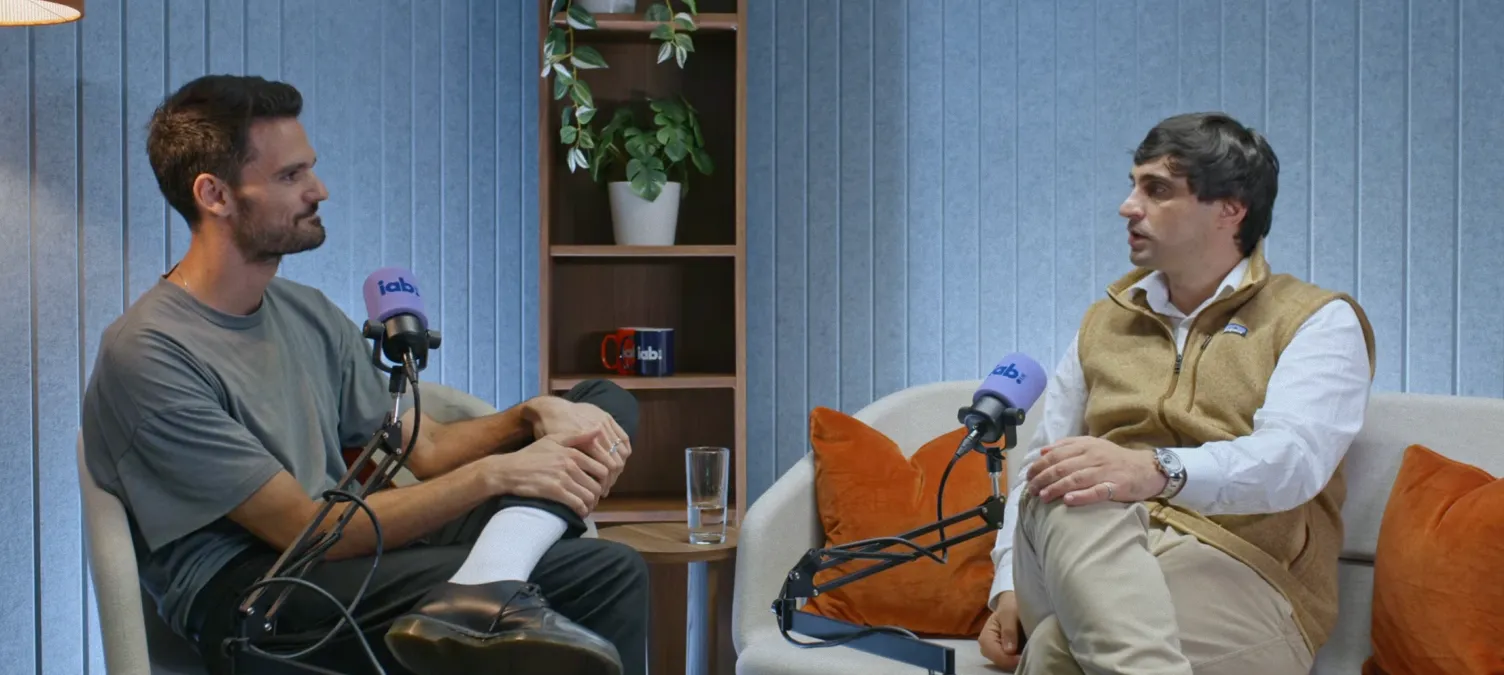
Luca Filardo joins IAB UK’s The Ad Tech Podcast to discuss how AI is changing contextual targeting, why DSPs and SSPs are converging, and how the Open Internet can compete with walled gardens.

Podcast: The Ad Tech Podcast, IAB UK
Host: Patrick Hahn
Guest: Luca Filardo, Chief Revenue Officer at Adlook
Patrick Hahn: Welcome, Luca, to the AdTech podcast. It is a pleasure to have you, especially as you are away from home at the moment. Can you just briefly introduce yourself?
Luca Filardo: I’m Luca Filardo. I lead the revenue team at Adlook. I’ve been in the industry for far too long. I’ve known you for more than a decade.
Patrick Hahn: I know.
Luca Filardo: And I just landed from Chicago a couple of days ago.
Patrick Hahn: You’re dealing with the jet lag very, very well. You say so. And as you mentioned, you’ve been in the industry for well over a decade now, and we’ve known each other for around that. What is your assessment of the speed of change that we’re seeing in the industry? It doesn’t just mean AI; it can mean any component of programmatic. What’s your kind of take on it at the moment?
Luca Filardo: I think the industry was a bit stagnant for quite some time. There was little to no innovation, and the speed of innovation I’m seeing today is comparable to the past 20 years of programmatic and digital in general. If you look at everything happening on the targeting front and on measurement, lots of cool companies are popping up, providing new value for marketers. The creative space has completely changed as well. Now you can produce multilingual assets and operate campaigns globally at a way lower cost than two years ago. So we are at a pivotal moment, and I think over the next two to three years the industry as we know it today will completely change.
Patrick Hahn: And in terms of some of those things you’ve mentioned, and most of those I guess are AI-enabled, what are some of the key capabilities that are now possible with AI, particularly in targeting from an Adlook perspective in a DSP?
Luca Filardo: Think about how we have done contextual targeting for the past 15 years. It was all based on keywords. Now with AI, we are able to analyze the intent that a page wants to provide to the end user and understand what kind of content the user is consuming, which is way more effective than static keywords that don’t mean much. Over the next two to three years, we will see the fragmentation within our industry reduced because development costs are falling, allowing companies to build integrated infrastructure from the ground up rather than relying on disparate DSPs, measurement providers, and targeting providers.
Patrick Hahn: That idea of being able to tie together disparate signals and potentially get to true return on investment within open web campaigns seems like something potentially solvable now.
Luca Filardo: As an industry, we gave a competitive advantage to walled gardens by building fragmented, ad-hoc niche tools. Marketers can go to a walled garden platform and get end-to-end execution, including media buying, targeting, creative, and measurement, which gives them an economic advantage. Digital and programmatic must do the same. Ultimately, advertisers only care about one question: “What is this dollar I’m investing returning on my balance sheet and top line?” That is the only question our industry must answer.
Patrick Hahn: Is collaboration within adtech part of that solution, and are companies getting smarter about what they do in-house vs. through partnerships?
Luca Filardo: It is. We are noticing a complete shift in what marketers are looking for. Every conversation with agencies and advertisers revolves around two pillars: advertising ROI and top-line impact. It is great to look at media metrics, but what is the actual impact on the balance sheet?
Patrick Hahn: How is Adlook approaching AI internally and integrating it into products?
Luca Filardo: Everything we do revolves around two pillars. First, operational efficiency: using AI to streamline media planning, campaign creation, execution, and reporting, automating tasks to give time back to traders and marketers. Second, campaign effectiveness: moving beyond standard real-time bidding to “Real-Time 2.0.” Using AI and LLMs, we leverage real-time sales-driving triggers for brands, enabling complex, extensive campaigns with minimal manual effort.
Patrick Hahn: You’ve always been a master of the human touch in client relationships. What is your personal approach to using AI, and what do you keep off-limits?
Luca Filardo: I would never let AI do strategic thinking on my behalf. I use AI extensively to streamline my day-to-day work, organize tasks, and manage my travel schedule, but I do not let AI make calls or strategic decisions on my behalf.
Patrick Hahn: Having worked across Italy, the UK, and now the US, how is AI perceived across these adtech markets?
Luca Filardo: The UK and US markets are very similar, and both are advanced. In the US, there are more new startups popping up due to market economics and funding access, but both regions are fundamentally solving the same core industry problems.
Patrick Hahn: Having transitioned between the sell side and buy side throughout your career (AudienceScience, Index Exchange, Adlook), what key insights did that bring?
Luca Filardo: Working on both sides gives you a complete perspective on how publishers approach monetization and what advertisers need. Furthermore, the strict divide between DSPs and SSPs will disappear soon. Supply and demand sides are converging, and our focus must be on driving outcomes for advertisers on the open web while helping quality publishers increase yield.
Patrick Hahn: Where do you see open web buying heading relative to walled gardens?
Luca Filardo: Programmatic has expanded far beyond display into CTV, in-app, and Digital Out-of-Home (DOOH). Walled gardens cannot compete with the open web when it comes to premium media inventory (e.g., HBO Max, Netflix, Hulu, The New York Times, Washington Post). If we make open web execution performant and measurable, ad spend will shift away from walled gardens back to the open web.
Patrick Hahn: What are your thoughts on agentic trading and AI-assisted buying models?
Luca Filardo: Anything that streamlines marketer access to the open web is positive. However, relationships between buyers and sellers will never disappear. An AI agent cannot replace human dialogue around brand strategy or custom supply opportunities. AI will assist with supply access, but the human element in trading remains irreplaceable.
Patrick Hahn: Looking ahead to 2027, what excites you most at Adlook?
Luca Filardo: Our AI product roadmap and client adoption, as well as expanding our Americas footprint across the US, Mexico, and Brazil.
Patrick Hahn: How has the culture transition to living in Chicago been?
Luca Filardo: Moving there in February was freezing cold (“minus a lot”), but Chicago has beautiful summers and definitely more sunshine than London!