
Programmatic on CTV: As Smart as We Think?
CTV blends big-screen impact with programmatic precision – but needs transparency and context to reach its full potential.
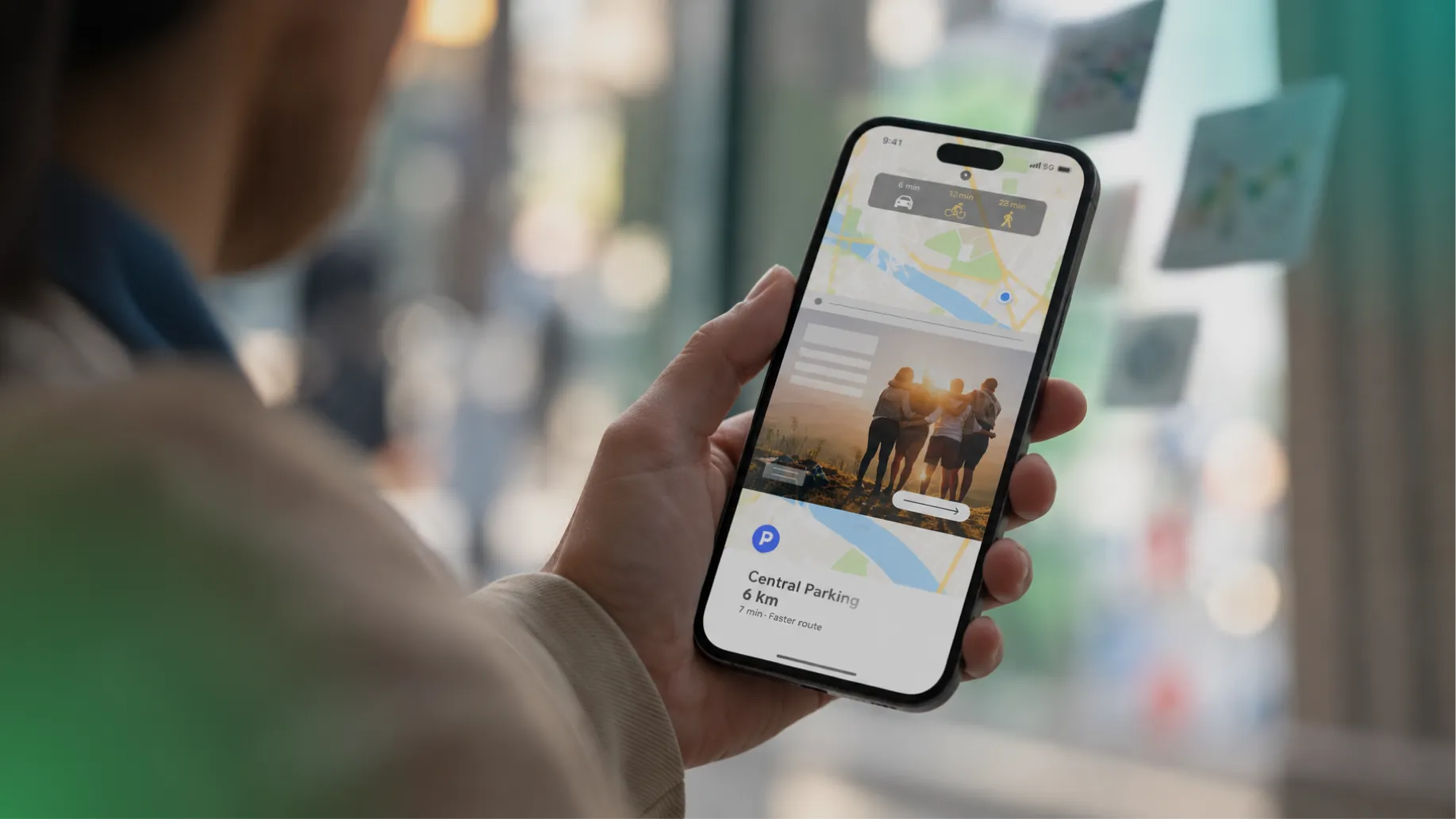
In-app works as one environment in an omnichannel plan: targeted on app context and genre, delivered in full-screen formats, and priced against the KPI you fix up front.

Open any app, and there is a use case behind it. Be it a conscious one, such as planning a trip, logging a workout, checking match scores, or building a shopping list. Sometimes less conscious, like killing boredom, escaping an awkward situation, or getting a dopamine boost. Every session starts with a “why”, so a brand that appears inside it joins the task instead of interrupting it.
That is what makes in-app worth a place in your media plan. It is also why the way the market spends on it deserves a second look.
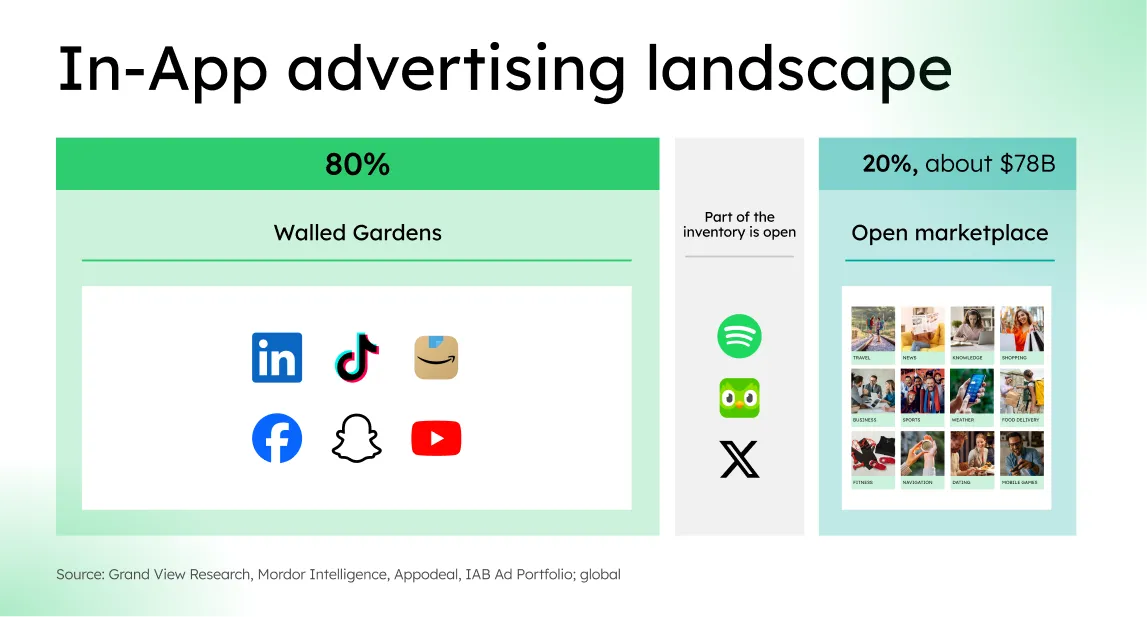
Global in-app advertising is valued at about $390B, and walled gardens hold roughly 80% of it, according to Grand View Research, Mordor Intelligence, Appodeal, and the IAB. The other 20%, around $78B, trades on the open marketplace, where independent apps sell their inventory in real-time auctions.
That split leaves brands leaning on a few closed platforms while the open apps stay outside the plan. These are the apps people use to play games, plan trips, and track workouts or calories. The audience is there to be reached: over a third of mobile time goes to personal apps, per the Squadapp 2025 report, Skyquest, and Electro IQ.
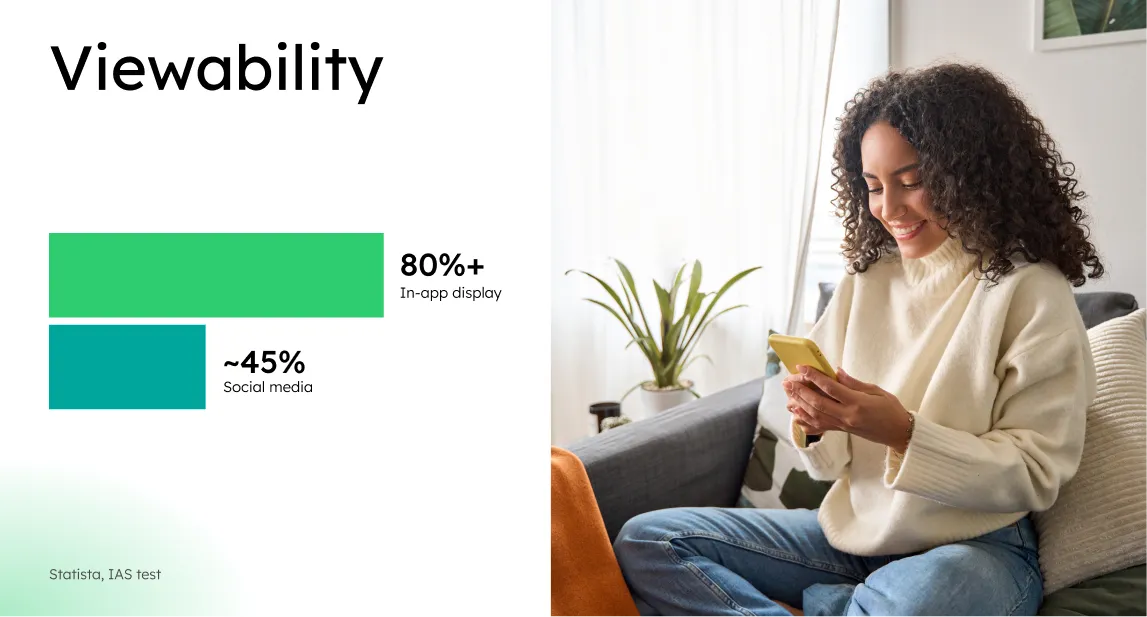
When the plan is a feed, the ad shares the screen with everything around it. Statista and an IAS test put viewability for social media near 45%, against more than 80% for in-app display.
Reach tells you the ad ran. Attention tells you the brand was seen. A plan that stops at reach reports the first and leaves the second to chance, and the gap between the two is wide. Interactive in-app ads deliver up to 22 seconds of attention per ad, about 10 times more than social, per Lumen and Amplified Intelligence. For a media plan, this moves the question from how many people the ad reached to how long they spent with it, and that is the number worth planning around.
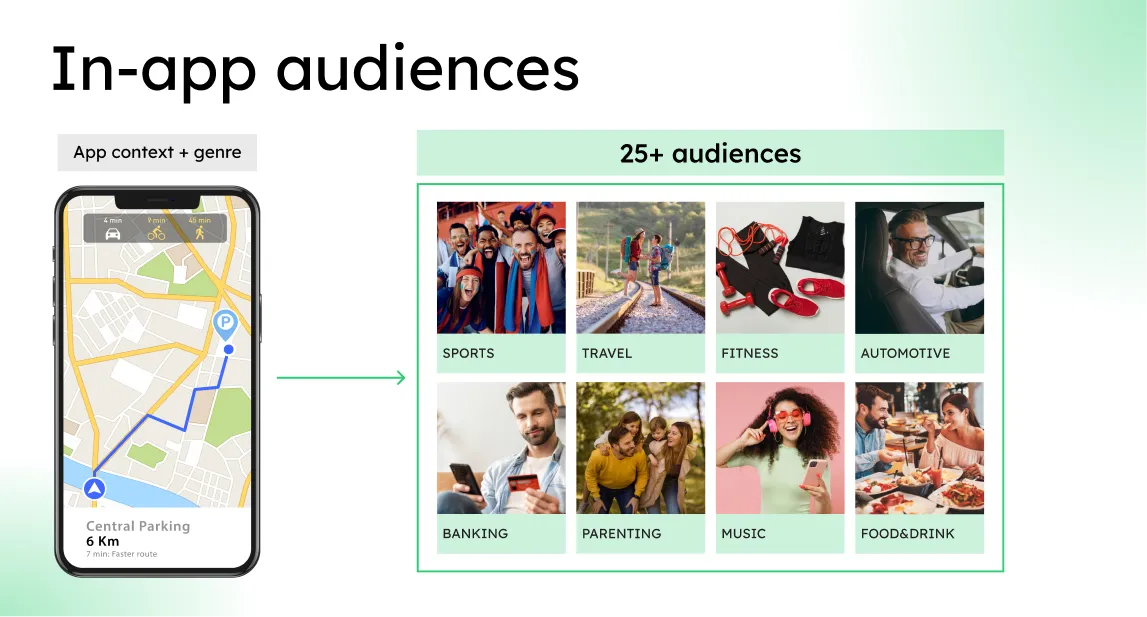
Adlook technology reads app context and genre: what the app is and what is going on in it. This is the same content-based approach Adlook uses on the Open Internet and CTV, applied to the app environment.
The Audience Marketplace holds 25+ interest audiences mapped to in-app inventory, from sports, travel, and fitness to automotive, banking, and parenting. It also holds audiences built for utility apps and mobile games. Plan at least three per campaign for scale and quality.
This is a qualitative difference from demographic targeting. Adlook’s 2025 study of socio-demographic data analyzed more than 150,000 impressions in the US and found that 35.73% of users were classified as both male and female, and 55.57% sat in several age groups at once. When users were surveyed, 67% of those placed in parent segments had no children. Context avoids that guesswork, because what the app is and what happens inside it can be observed rather than inferred. Read the full findings in the Socio-Demographic Data report.
Apps are an additional environment, not a separate plan. Combined with the Open Web and CTV, they let a brand meet people in different moments and moods: active discovery on the Open Internet, personal motivation in personal apps, and entertainment on CTV and in mobile games.
The inventory is curated before it reaches the plan. App-store policies remove the worst offenders early, and Adlook adds its own brand safety and suitability layer on top. Brand Lift Studies and DoubleVerify ad verification are available on request, so recall and media quality can be checked against the goal.
Start with the goal your board carries. Pick at least three in-app audiences that fit it, choose the format built for the KPI, and add in-app as one more environment in the plan. Get in touch to see which audiences fit your goal in your market.