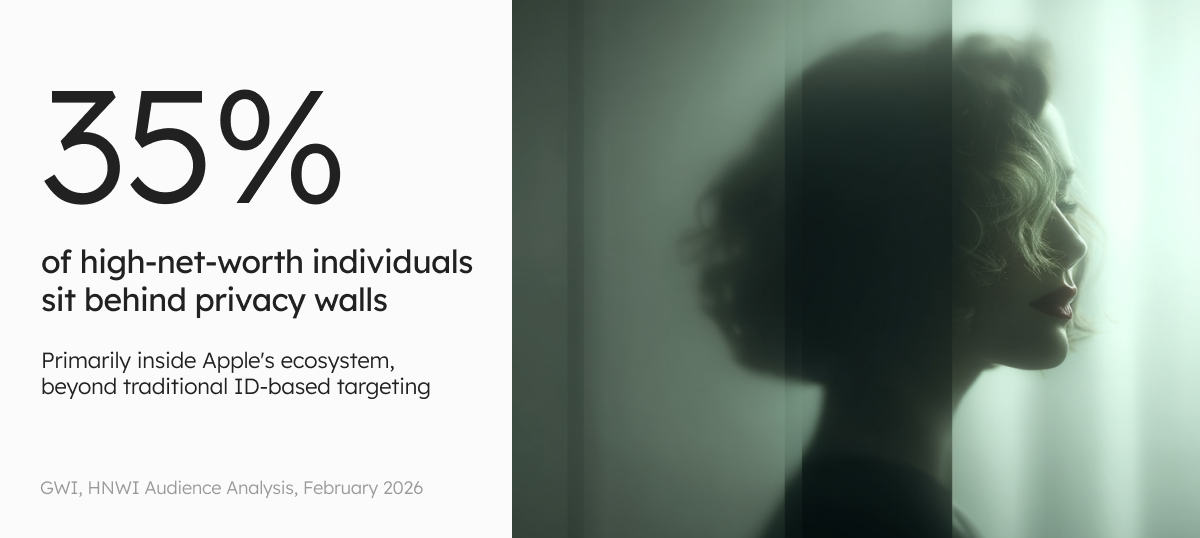
If identity-based targeting cannot find this audience, what can?
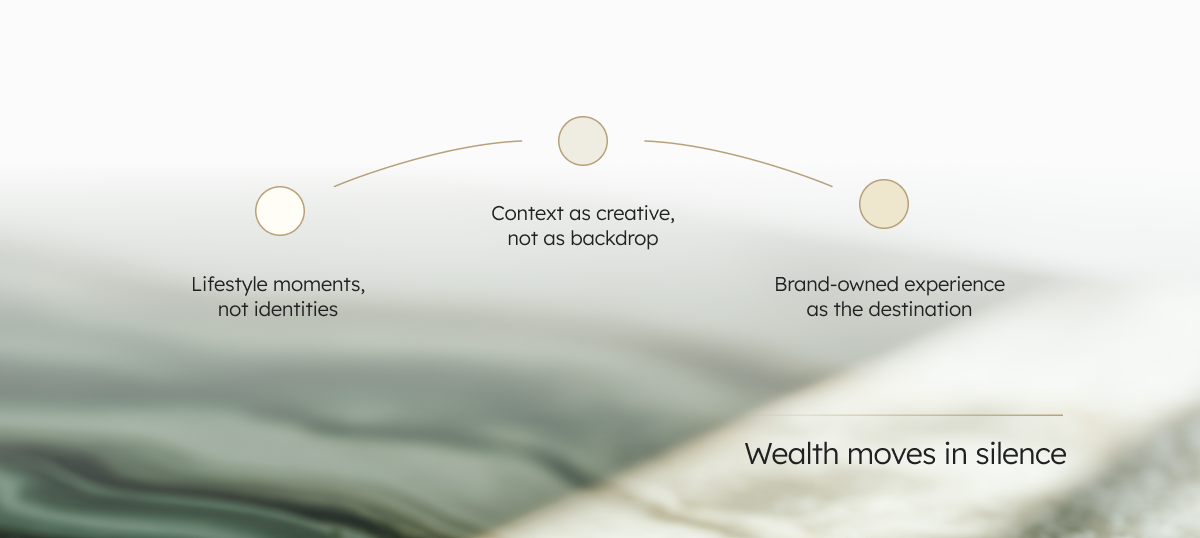
A better identifier was never the answer – a better question is. Instead of asking who is on this page, ask what the page is actually about, and what kind of lifestyle the reader is signalling. That shift, from tracking to understanding, is what makes the open web reachable again for luxury.
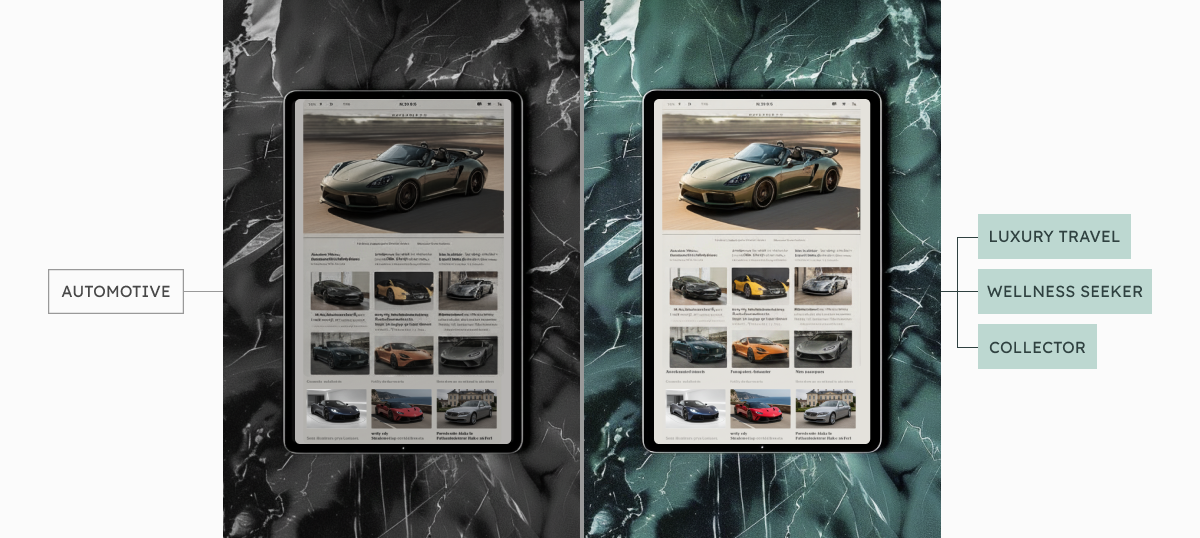
Modern contextual targeting, built on large language models, doesn’t stop at category metadata. A standard contextual system reads a page about a new sports car and labels it Automotive. Adlook’s contextual intelligence reads the same page and recognises it as a luxury travel cue, a collector signal, or a wellness seeker moment, depending on the language, the brands referenced, the lifestyle context.
In Adlook’s index, lifestyle-rich environments break down very differently from how standard contextual tools would describe them: Travel at 45.7%, Technology at 9.6%, Art at 8.8%, Luxury Lifestyle at 2.3%, with food, automotive, fashion and wellness layered underneath. Each category maps to a real behavioural moment, and together they unlock incremental, unique reach of +36% versus other leading DSPs (Nielsen incremental reach study, March to April 2025), driven primarily by the privacy-first inventory Adlook accesses through content understanding. The audience was always there. Now the tooling reads it.